
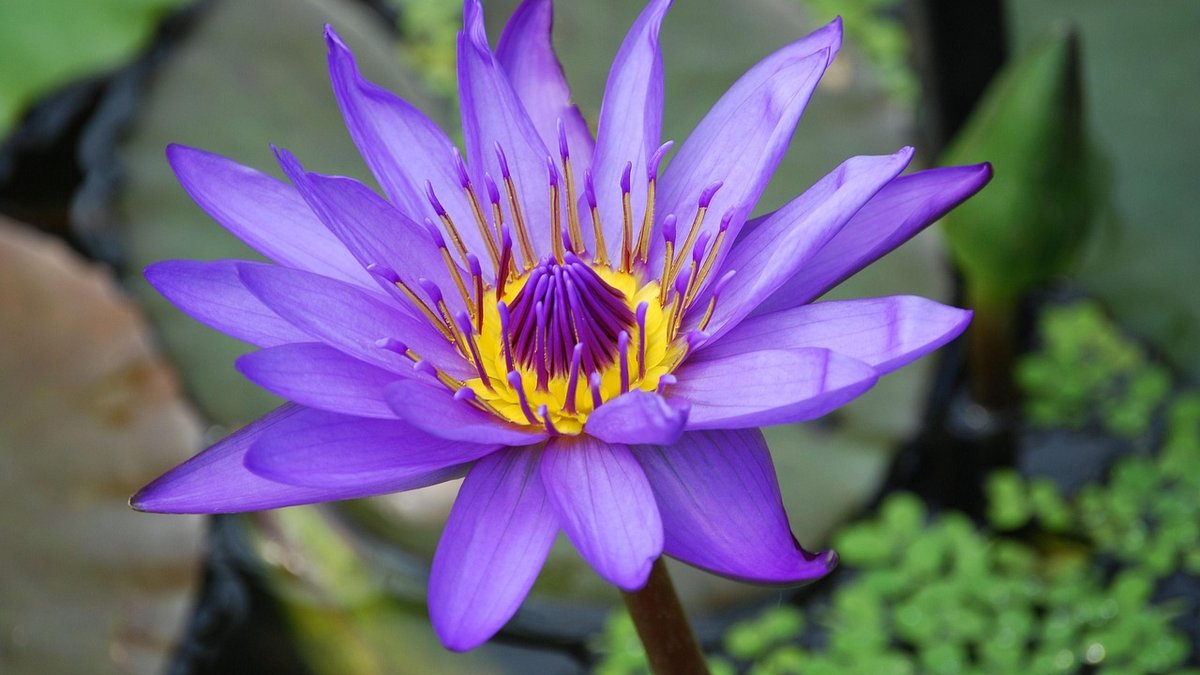
Cloudy, pea-green water is the single most common complaint from UK pond owners, and it is rarely caused by a lack of filtration. In most cases, the pond simply has too many dissolved nutrients and too much direct sunlight, an irresistible combination for suspended algae. Plants tackle both problems at once. They strip nitrogen and phosphate from the water as they grow, and their leaves shade the surface so algae cannot photosynthesise freely. Get the planting right and a pond will often clear without any chemicals at all.
The trick is to plant in layers. Submerged species work below the surface like living filters, floating plants shade from above, and marginals tidy the edges while drawing nutrients through their roots. Aim to cover around half the surface area with foliage by midsummer, but leave some open water so the pond can breathe and you can still enjoy the wildlife.
These are the plants doing the quiet, unglamorous work of clarifying your water. They absorb nutrients directly through their leaves and, crucially, release oxygen during daylight hours, which supports fish and beneficial bacteria. Plant them in baskets of loam-based compost topped with gravel, or simply weight bunches and drop them in.
Floating plants are the fastest way to clear green water because their roots hang directly in the water column, mopping up dissolved nutrients that algae would otherwise use. Their leaves also cast shade, cooling the pond and reducing light penetration. Be aware that some species are invasive and must never be released into the wild — compost surplus growth rather than dumping it in a stream or canal.
Marginal plants grow in the shallow shelf around the pond's perimeter, their roots reaching into the water and extracting nutrients before algae can use them. They also soften the pond edge, hide liner, and give amphibians somewhere to haul themselves out. Plant them in baskets of aquatic compost topped with gravel to stop fish and birds disturbing the roots.
Variety is what keeps a pond balanced. A good rule of thumb is to aim for roughly two-thirds oxygenators by volume, with the remaining space shared between floaters and marginals. This layered approach means nutrients are being removed at every level, from the depths to the waterline, rather than relying on a single species to do all the work.
Watch out for aggressive growers. Plants such as Canadian pondweed, parrot's feather and floating pennywort can smother a small pond within a season. If you are unsure, check that a species is not listed as an invasive non-native before buying, and always choose native or well-behaved alternatives where possible. A little restraint at the start saves a great deal of dredging later.
Even the best-planted pond needs a little maintenance. Thin floating plants every few weeks in summer so light and oxygen can reach the water below. Cut back submerged plants in late summer before they die back and release their nutrients back into the water. Remove fallen leaves in autumn, because a blanket of rotting foliage is the fastest route to a nutrient spike the following spring.
Introduce plants gradually, ideally between late spring and early summer when water is warming up and growth is strong. Give new plantings a few weeks to settle before judging the water clarity — the change is often gradual rather than dramatic. With patience, the right mix of submerged, floating and marginal species will reward you with a pond that stays clear, wildlife-rich and genuinely lovely to sit beside all season.

Hi, my name is Anthony kuber. I am artist and fashion designer.
I love to travel and writing blogging.
Your email address will not be published. Required fields are marked *
Software Developer & Writer
Hey, I'm Diva, a developer and writer blending code and creativity. I'm driven by a deep curiosity and a relentless pursuit of excellence. Join me as I craft digital solutions and captivating stories.


