
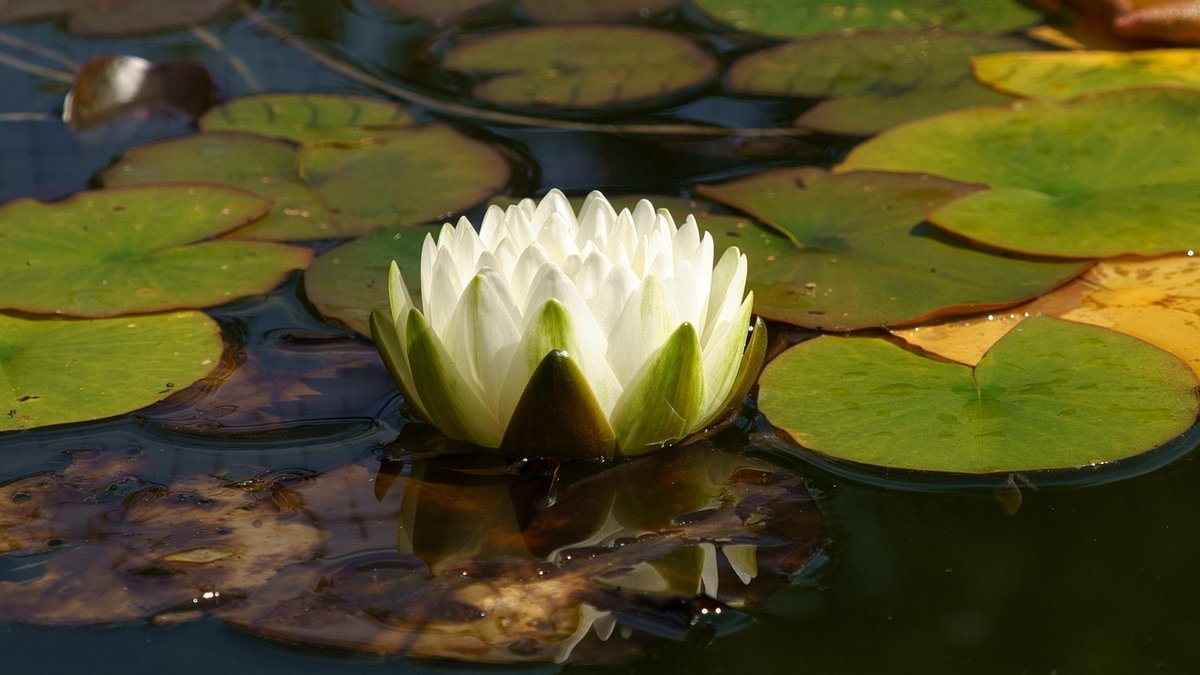
A pond without plants looks like a hole lined with rubber, because that is exactly what it is. Marginal plants – the ones that grow in the shallow water at the edge, with their roots wet and their crowns above the surface – do the job no amount of stone edging can manage. They soften the transition from water to land, hide the liner, and give the whole thing a settled, established look from the first season.
They are also working plants. Marginal foliage shelters froglets, newts and dragonfly nymphs, and provides cover for small fish. The flowers feed bees and hoverflies through summer, and the seedheads hold on into winter for birds. Best of all, they give you colour exactly where you want it – at eye level, at the edge of the water, rather than out of reach in the middle.
Depth is the single thing most often got wrong. Plant a marginal too deep and it sulks, yellows and rots; plant it too shallow and it dries out in a hot June. Measure the planting shelf with a cane before you order anything, and group your plants by depth.
If all your shelves are the same depth, don't despair. Stand shallow-water baskets on a couple of bricks or an upturned crate to raise them, and disguise the support with larger pebbles.
Mesh aquatic baskets are the tidy solution, and lining them with hessian keeps the compost in while letting roots and water through. The hessian rots away over a couple of seasons, by which time the root ball holds itself together perfectly well.
What goes in the basket matters more than the basket itself. Ordinary multipurpose compost is a poor choice: it is light, it floats, and it releases a rush of nutrients that feeds blanketweed rather than your plants. Use a purpose-made aquatic compost, or a heavy loam-based mix with minimal organic matter. Avoid anything peaty, barky or freshly manured. The leaner the mix, the better your water quality will be.
For a more natural look, tuck a few bare-rooted plants such as water mint directly into gravel pockets between edge stones, where the water just laps the surface.
A row of single pots spaced evenly around a pond looks like a garden centre display. Plant in groups of three or five of the same variety instead, and repeat that grouping on the opposite side of the pond to pull the design together. One generous clump always reads better than several mean ones.
Once planted, hide the evidence. Let gravel, cobbles or a low creeping plant such as Lysimachia nummularia spill over the basket rims and the liner edge. Leave one gentle ramp of stones or a piece of rough timber at the edge so hedgehogs, frogs and other wildlife can climb out – a steep-sided pond is a trap for small creatures.
Push a slow-release aquatic fertiliser tablet into the compost of hungry plants in late spring, but no more than the label suggests – excess nutrients mean green water. Divide congested baskets every second or third spring, splitting the root ball with a knife or two forks and replanting the healthiest sections.
In autumn, cut back collapsing foliage but leave seedheads and hollow stems standing where you can; they look good frosted and insects overwinter inside them. Tidy properly in late winter or early spring, cutting stems to just above the crown before new growth starts. Keep an eye out for blanketweed in warm weather and twirl it out with a stick rather than reaching for chemicals.
Do that much, and the pond edge will carry colour from the first marsh marigolds in March through to the last purple loosestrife in September – with very little input from you in between.

Hi, my name is Anthony kuber. I am artist and fashion designer.
I love to travel and writing blogging.
Your email address will not be published. Required fields are marked *
Software Developer & Writer
Hey, I'm Diva, a developer and writer blending code and creativity. I'm driven by a deep curiosity and a relentless pursuit of excellence. Join me as I craft digital solutions and captivating stories.


